Buyer guide
OEM vs ODM Cosmetics: Which Manufacturing Model Fits Your Brand?
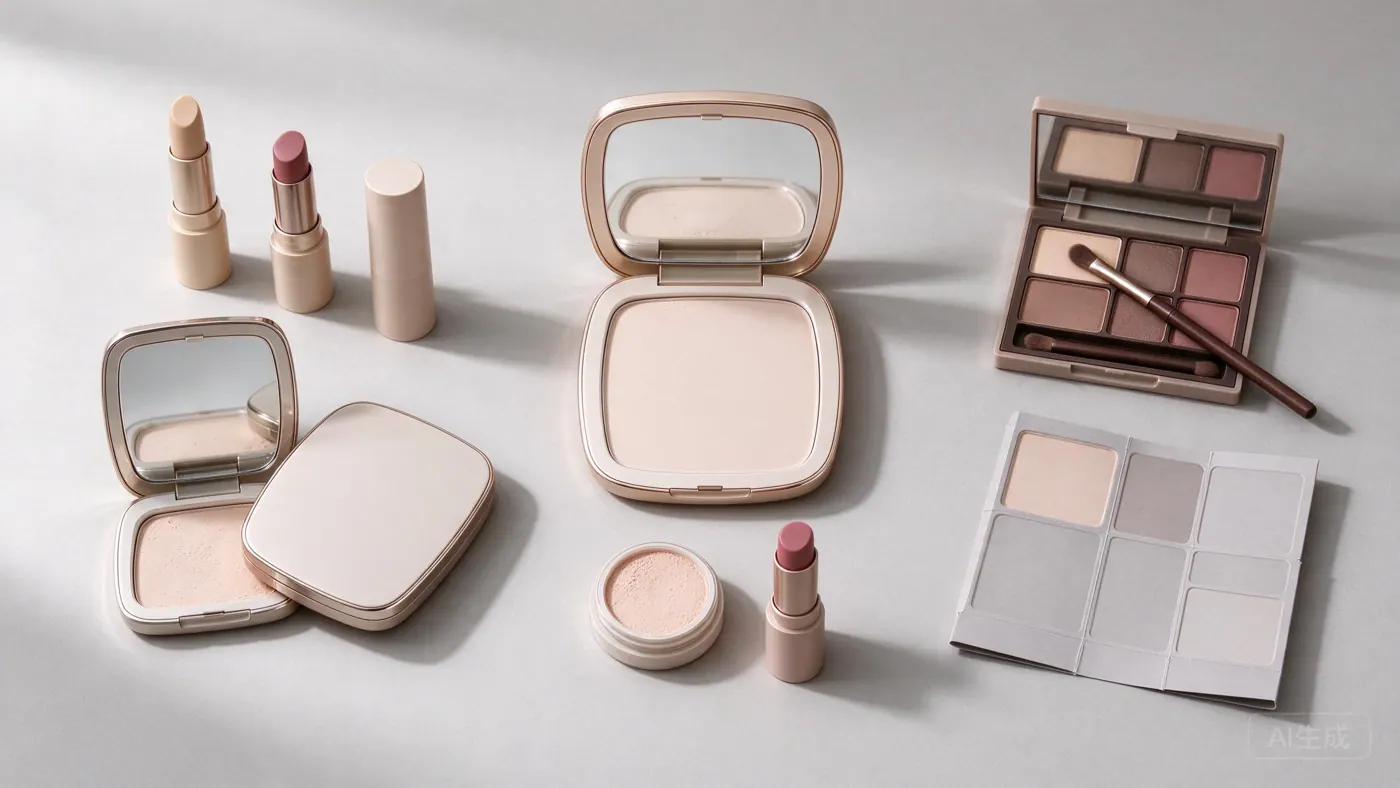
Every OEM cosmetic project starts with the same question, and it isn't the unit price: who owns the formula? Once you're comparing OEM vs ODM, you're really deciding how much of the product you want to control and how much you're comfortable handing over. Private label sits underneath both as the fastest, least customised route. Pick the wrong model and you can lose a season — or spend two years building a range you can't defend.
We're Magic Color, a color cosmetics manufacturer in Jinhua, Zhejiang, and we run all three models for brand owners, retail buyers and sourcing managers. Here's how we explain the difference to buyers who are still comparing options before they contact anyone.
The three models, in plain terms
Private label
A formula and a component already exist. You choose from the range, add your decoration — print, colour, label — and sell it as your own. Nothing is developed. That's the appeal: lighter MOQ pressure, short timelines, minimal technical risk. The trade-off is duplication. If you can buy the same lip gloss, so can the brand next to you on the shelf.
OEM
Original equipment manufacturing. The product is built to your brief: your formula (or one developed and assigned to you), your shade range, your packaging. You're paying for development and testing, so it costs more and takes longer than picking from a catalogue. What you get back is something a competitor can't buy off the shelf. At Magic Color, standard formula development runs 14 days, or 7 on an express basis.
ODM
Original design manufacturing. The factory does the design work — formula, texture, sensorial direction, and often the packaging concept — and you put your brand on it. ODM cosmetics make sense when you have distribution and a brand story but no formulation team. The catch is exclusivity: it's negotiated, not automatic. Get territory, channel and duration in writing before you commit.
Who owns the formula and the packaging?
This is the part buyers skip in the meeting and regret at exit. Ownership rules differ by model, and they belong in the contract, not in an email.
- Private label: the factory owns the formula. It may be sold to other brands, including in your market. You own your artwork and your trademark.
- OEM: the formula is developed for you and typically assigned or licensed to you. Exclusivity is the normal expectation — confirm it in writing anyway.
- ODM: the factory owns the formula. You buy the right to sell it under your brand, and exclusivity has to be spelled out: which markets, which channels, how many years.
Packaging follows a similar line. Stock moulds are cheap and available now. A custom shell means tooling and a higher MOQ — at Magic Color, 12,000 pcs for custom component shells, against 6,000 pcs for basic models without special processes. Electroplating, 3D printing, silk screen, embossing and new moulds all sit in the 12,000 pcs bracket. That number is the real gate between "test the market" and "own the shelf".
More detail on how we split these models sits on our OEM/ODM page; the catalogue-based route is described under private label.
Speed, cost and risk — the honest trade-offs
Private label wins on speed. There's no development phase, so your timeline is decoration plus production. OEM and ODM add a development cycle before production even starts.
For reference, our standard figures: formula development 14 days (7 express), production 45 days from order confirmation to shipment (30 express), samples 3–7 days, free, with you covering freight and two free revisions. Price breaks usually land at 12k, 30k, 50k and 100k pcs. None of this is unusual for the industry — but ask for the numbers in writing, because a supplier who won't commit to a development timeline usually has a queue you haven't been told about.
Risk is where the models really separate.
- Private label risk: commercial, not technical. Your product isn't defensible. Marketplaces fill with near-identical items and price becomes the only lever.
- OEM risk: you carry it. If a shade fails stability testing or a component doesn't seal, the cost of the fix comes out of your budget, not your supplier's.
- ODM risk: dependency. If the factory sells your bestseller to someone in the same territory, you've funded their product development.
Compliance risk deserves its own paragraph. In the EU, Regulation (EC) No 1223/2009 requires a Responsible Person established in the EU, a Product Information File and CPNP notification before a product goes to market. In the US, the MoCRA framework added facility registration and product listing obligations, plus adverse event reporting and safety substantiation. None of it is a formality you can leave until the container is on the water. Whoever holds the file — you or your manufacturer — decides how fast you can fix a labelling problem.
Manufacturing practice is the third leg. ISO 22716:2007 is the GMP reference most retail audits point at, and it's the baseline we're certified against, alongside GMPC, BRCGS, SMETA, BSCI and RSPO.
Comparison table: private label vs OEM vs ODM
| Question | Private label | OEM | ODM |
|---|---|---|---|
| Who develops the formula | Factory, from its existing range | Factory, to your brief | Factory, on its own initiative |
| Who owns the formula | Factory | Usually you, per contract | Factory; exclusivity negotiable |
| Packaging | Stock component, your decoration | Stock or custom shell | Usually stock, chosen by factory |
| Typical MOQ | Lowest of the three | 6,000 pcs basic; 12,000 pcs special processes | Depends on the component |
| Development time | None | 14 days standard, 7 express | Built into the offer |
| Differentiation | Low | High | Medium to high |
| Who carries the technical risk | Mostly the factory | You | Shared |
| Best for | Testing a market or filling a price gap | A range you intend to defend | Scaling fast on a trend |
When private label stops being enough
There's no fixed revenue threshold. The signals are behavioural, and most buyers spot three or four of them at once:
- Your best seller is a stock item that two or three competitors also run.
- A retailer asks for exclusive shades, a custom palette layout, or a set built around their planogram.
- You need a claim your stock formula can't support — a specific ingredient story, a texture, or child-safety testing to EN-71 and CE requirements.
- You've reordered the same SKUs for several seasons, so volume is predictable enough to absorb a 12,000 pcs custom MOQ.
- Margin is being decided by freight and duty rather than retail price, which usually means you need lighter or more compact packaging designed around your route to market.
A common path looks like this: private label to test the category and learn what sells, ODM to differentiate without hiring a formulation team, OEM once you know your winners and want to own them. You don't have to pick one and stay there. Say you're a mid-size retailer building a children's range — starting on ODM sets that use a water-based peel-off nail polish, then moving the best-selling palettes to OEM once volumes justify it, is a normal sequence rather than a failure of the first model.
What to ask a private label cosmetics manufacturer before you sign
Whether you end up on private label, ODM or OEM, four questions separate a supplier from a partner:
- Who owns the formula if we stop working together, and what happens to the moulds?
- Is exclusivity in the contract — territory, channel, duration — or just in the sales pitch?
- Who holds the compliance file for each market, and can you supply batch-level third-party reports on request?
- What's the real lead time in your busiest month, not your quietest?
Our own answers: third-party reports from SGS, Intertek and CTI are available per batch on request, every raw material arrives with a COA, and batch samples are retained until six months after the end of the product's shelf life and sit in a constant temperature and humidity room for traceability. The detail is on our quality page and process page.
Where Magic Color fits
We've been in cosmetics since 2008, working with brand owners and retail buyers across North America, Europe, South America, the Middle East and Southeast Asia. Current operation: 30+ automated production lines, nearly 400 employees, about 30,000 m², and an automation rate above 70%. All filling workshops in our current Jinhua factory are Class 100,000 GMPC cleanrooms. A new facility of about 100,000 m² with 45 lines is expected to open in 2027.
We hold 500+ mature formulas and turn out 600+ new product development samples a year, so an ODM conversation usually starts from something close rather than a blank page — which is exactly why ODM stays faster than OEM. Formulas can be built to EU (EC) No 1223/2009, REACH, EN-71 for kids' items, US FDA and MoCRA requirements, GSO 1943/2021, TR TC 009/2011, India's Cosmetics Rules 2020 and ASEAN requirements, depending on where you sell.
Browse the range on our products page — lip, eye, face, nail and gift sets — or send a brief through contact and we'll tell you which model fits it. Blunt version: the model matters less than the paperwork. Ask for the compliance file before you ask for the price list.
FAQ
What's the main difference between OEM and ODM cosmetics?
In OEM, the product is developed to your brief — your formula or one assigned to you, your shades, your packaging — and you normally own or control the formula. In ODM, the factory develops the formula and often the packaging concept, and you buy the right to sell it under your brand. ODM is faster and usually cheaper; OEM gives you something competitors can't order from the same catalogue.
Is ODM cheaper than OEM?
Usually yes, because you're not paying for a full development cycle — the factory has already absorbed that cost and spreads it across several buyers. The saving comes with a trade-off: unless you negotiate exclusivity, the same formula can be sold to another brand. OEM costs more upfront but builds an asset you control.
Can I move from private label to ODM later?
Yes, and plenty of brands do. Private label is a sensible way to test a category. Move to ODM when your best sellers are being copied, when a retailer asks for exclusive shades or custom sets, or when your reorder volume is steady enough to absorb a higher MOQ — 6,000 sets for special-process sets at Magic Color.
Who owns the formula in each model?
Private label: the factory. OEM: typically you, per contract. ODM: the factory, unless exclusivity is negotiated for specific markets, channels and years. Whatever the model, get ownership and exit terms in writing before the first purchase order — it's the cheapest insurance you'll ever buy.